Productivity ·
When Your Brain Gets in the Way: The Hidden Cost of Energy Management
Have you ever noticed how making big decisions — changing jobs, starting a business, or ending a relationship — feels exhausting?
Free: the Financial Independence Starter Kit, a net worth tracker and FIRE calculator that show where you stand and when work could become optional.
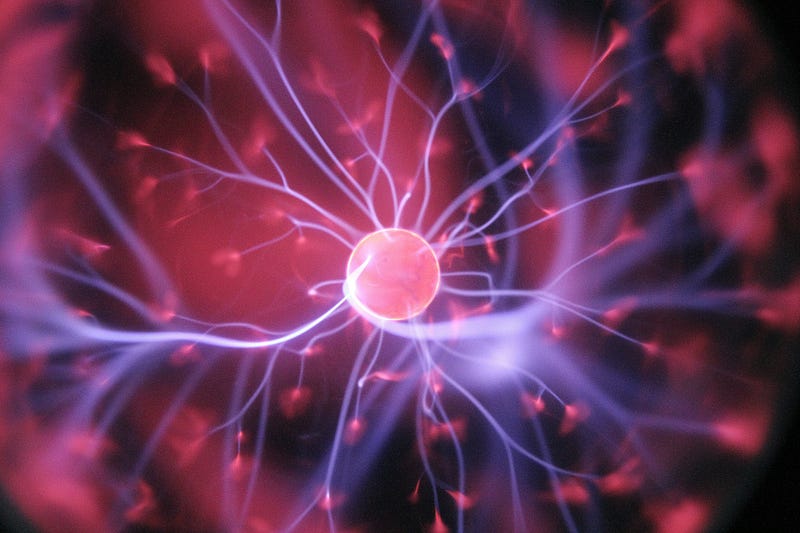
One of the brain’s most important jobs isn’t creativity, logic, or even survival — it’s energy management. Your brain is constantly calculating how to keep you alive while spending as little energy as possible.
Here’s the twist: Your brain makes up only about 2% of your body’s mass, yet it consumes roughly 20% of your total energy. That’s a massive amount of fuel for something that weighs about three pounds.
So when you’re faced with a tough or uncertain decision, your brain’s first instinct isn’t curiosity — it’s self-preservation. It looks for the path that demands the least effort. It pushes you toward comfort — routines, habits, and familiar choices — because those require less energy to process.
In other words, your brain is like a brilliant but overly cautious accountant. It’s constantly balancing an invisible energy budget:
“Why take that risk? Why change something that’s already working? Let’s stick with what we know.”
But here’s the paradox — the choices that truly change your life are usually the ones that cost the most energy.
Learning a new skill. Starting over. Having a difficult conversation. Breaking an old habit.
These things feel hard not because they’re wrong — but because your brain resists the effort they require.
The Brain Loves Comfort, Not Growth
Neuroscientist Dr. Andrew Huberman often explains that the brain’s main goal isn’t to make you happy — it’s to make you safe and efficient. It values predictability over progress.
That’s why self-growth often feels uncomfortable. Your biology is wired to conserve energy, not to take leaps of faith.
But if you look at the people who’ve made meaningful progress in life — entrepreneurs, artists, innovators — you’ll notice a pattern: they’ve learned how to override their brain’s resistance.
Take Steve Jobs, for example. When he was fired from Apple, his natural instinct could have been to retreat — to conserve energy, protect his ego, and stay comfortable. But instead, he founded NeXT and helped launch Pixar, ventures that pushed him far outside his comfort zone. Later, those same experiences became the foundation for Apple’s second revolution.
Jobs didn’t overcome fear by ignoring it; he moved through it, spending his mental energy where it mattered most — on creation, not conservation.
Energy Is a Currency — Spend It Wisely
Your brain’s energy-saving mechanism isn’t the enemy. In fact, it’s what kept our ancestors alive when food was scarce and danger was everywhere. But in the modern world, where growth depends on learning, adaptation, and reinvention, playing it safe can become its own form of risk.
Think of energy like a currency:
-
Spend too much on the wrong things (like worry or overthinking), and you’ll burn out.
-
Spend too little on meaningful effort, and you’ll stagnate.
The goal isn’t to work harder all the time — it’s to spend energy intentionally. Know when to rest. Know when to push through.
When your brain says, “I don’t feel like it,” that’s not always fatigue — sometimes, it’s your biology guarding its energy reserves. That moment of hesitation is your signal to pause and ask yourself:
“Is this tiredness, or fear of growth?”
The Mind’s Quiet Protest
The truth is, your brain will always protest change — even good change. It’s like a friend who means well but doesn’t see the full picture.
You don’t have to silence it; you just have to lead it.
You can say to yourself:
“I hear you — but this matters.”
Every meaningful step in life — every business started, every book written, every career pivot — was made by someone who felt resistance and chose to act anyway.
Growth feels heavy because it is heavy. But that weight is a sign of transformation, not failure.
From Energy Conservation to Energy Investment
So how do you manage your brain’s energy economy without letting it hold you back?
Here are a few small shifts:
-
Rest strategically. Recovery isn’t laziness — it’s preparation.
-
Do one hard thing daily. Train your brain to tolerate discomfort.
-
Reward effort, not just results. That rewires your brain to see challenge as opportunity.
-
Reframe the resistance. Instead of saying, “This is too hard,” try, “This is growth happening.”
Over time, these small acts teach your brain that discomfort isn’t danger — it’s progress in disguise.
As William James, one of the fathers of modern psychology, once said:
“The greatest weapon against stress is our ability to choose one thought over another.”
When you learn to consciously choose how to spend your mental energy, you shift from survival mode to creation mode — from conserving life to building it.
Because in the end, energy conservation keeps you alive — but energy investment helps you thrive.