Wealth ·
Timing the Market vs. Time in the Market: The Simple Truth Most Investors Learn Too Late
Why staying invested beats trying to predict the market — and how to use downturns to your advantage in your FI journey.
Free: the Financial Independence Starter Kit, a net worth tracker and FIRE calculator that show where you stand and when work could become optional.

The Temptation to Time the Market
At some point in every investor’s journey, the same question appears:
“Should I get out now and come back later?”
It sounds logical.
Avoid the downturn. Re-enter at the bottom. Maximize gains.
But in reality, timing the market consistently is extremely difficult — even for professionals.
Markets move based on:
-
Economic data
-
Interest rates
-
Global events
-
Investor psychology
And often, they move when you least expect it.
This is why many investors underperform — not because they chose bad investments, but because they tried to jump in and out at the wrong times.
As Peter Lynch famously said:
“Far more money has been lost by investors preparing for corrections, or trying to anticipate corrections, than has been lost in corrections themselves.”
The Reality: Markets Go Up… But Not in a Straight Line
Over the long run, the stock market has a clear trend: upward.
But that journey is far from smooth.
There are:
-
Pullbacks
-
Corrections
-
Bear markets
Since 1945, there have been:
-
37 market corrections of 10% or more
-
13 bear markets, with declines of 20% or more
Volatility is not the exception — it’s part of the process.
Why Time in the Market Wins
The key advantage of staying invested is simple:
Compounding needs time, not timing.
When you stay invested:
-
Your investments continue to grow
-
Dividends get reinvested
-
Recoveries work in your favor
But when you try to time the market:
-
You risk missing the best recovery days
-
You interrupt compounding
-
You increase emotional decision-making
As Warren Buffett put it:
“The stock market is designed to transfer money from the active to the patient.”
Patience is not passive — it’s a strategy.
What It Takes to Reach $1 Million
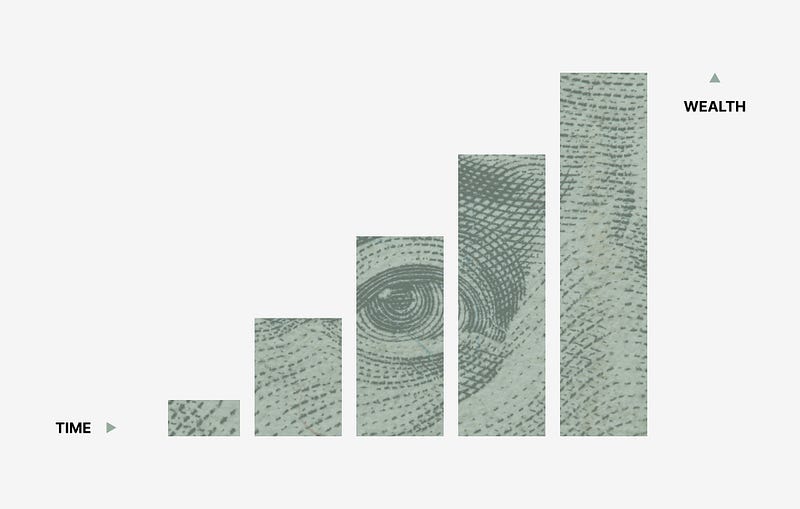
To make this more tangible, let’s look at what it takes to reach $1 million investing in the S&P 500 (assuming ~8% average annual return):
Monthly Investment Needed
-
10 years: ≈ $5,500/month
-
20 years: ≈ $1,700/month
-
30 years: ≈ $670/month
The takeaway is powerful:
Time dramatically reduces how much you need to invest.
The earlier you start, the more you let compounding do the heavy lifting.
Trying to time the market might feel productive, but simply starting early and staying consistent is far more impactful.
A Smarter Approach: Rebalance Instead of React
Instead of trying to predict the market, a more effective approach is to rebalance your portfolio.
When markets pull back:
-
Some assets become undervalued
-
Your allocation shifts
-
Opportunities appear
Rebalancing allows you to:
-
Buy at lower prices
-
Maintain your target allocation
-
Stay disciplined
It replaces emotional decisions with a systematic process.
Turning Market Drops Into Opportunities
Market downturns are not just something to survive — they can be used strategically.
One powerful example is Roth conversions.
During a market decline:
-
Your traditional IRA value drops
-
You can convert at a lower valuation
-
The recovery happens in a tax-free account
This turns volatility into a long-term advantage.
Combined with rebalancing, it becomes part of a proactive FI strategy.
The Real Risk Isn’t the Market — It’s Behavior
The biggest risk in investing is not volatility.
It’s behavior.
-
Fear → selling at the bottom
-
Greed → buying at the top
Trying to time the market amplifies both.
Staying invested requires:
-
Discipline
-
Patience
-
Trust in the process
What Really Moves the Needle
The market will rise. The market will fall. And it will do both unpredictably.
You don’t need to predict it.
You need to participate in it.
Focus on:
-
Consistency
-
Long-term investing
-
Smart allocation
-
Taking advantage of downturns
Because in the end, reaching financial independence is not about making perfect decisions…
…it’s about making consistent ones over time.