Wealth ·
The Hidden Cost of Doing Nothing: How Inflation Silently Destroys Your Savings
Why “Doing Nothing” Feels Safe (But Isn’t)
Free: the Financial Independence Starter Kit, a net worth tracker and FIRE calculator that show where you stand and when work could become optional.
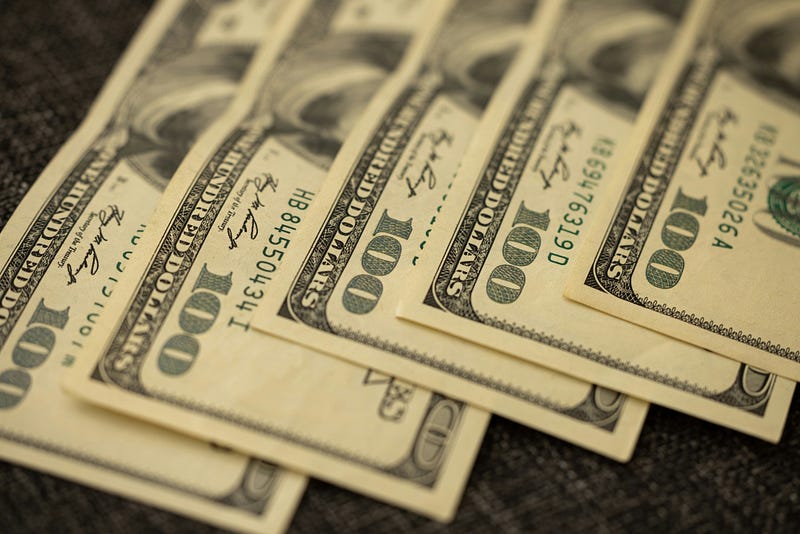
Have you ever felt proud of saving a few thousand dollars in the bank — only to realize, years later, that it buys you less than before? That’s not bad luck. That’s inflation quietly at work — the silent destroyer of your money’s value.
We often think doing nothing with our money is “safe.” No risk, no loss, right? But here’s the uncomfortable truth: not investing is a decision too — and often, it’s the costliest one.
The Silent Thief in Your Wallet
Inflation doesn’t announce itself. It doesn’t knock on your door or send you a bank alert. It just quietly eats away at your purchasing power.
If you saved $10,000 in 2014, you’d need about $13,700 in 2024 to buy the exact same things — thanks to inflation averaging around 3–4% a year in the U.S.
So even though your bank balance hasn’t changed, its real value — what it can actually buy — has eroded. You didn’t spend it. You didn’t lose it in the market. But inflation took its share anyway.
It’s like running a marathon where the finish line keeps moving farther away — no matter how steady you go, you fall behind if you don’t pick up speed.
The human brain craves safety. We’re wired to avoid risk — even when that “safety” is slowly costing us.
Psychologists Daniel Kahneman and Amos Tversky described this as loss aversion — the idea that we fear losing money more than we value gaining it. That fear keeps us in low-interest savings accounts, clinging to comfort while inflation quietly wins.
But the irony is this: by doing nothing, you guarantee a loss. By investing, you give your money a chance to work for you instead of letting inflation eat it alive.
My Own Wake-Up Call
I used to keep most of my savings in a bank account. It felt responsible — “safe.”
But once I started focusing on financial literacy, everything changed. It took me only months, not years, to realize that saving alone was a losing game.
When I looked at how much my money could actually buy compared to a few years earlier, it hit me — my “safety” strategy was quietly shrinking my future.
So I started investing — not recklessly, but intentionally. I learned how to make my money work, instead of letting it rest. That mindset shift changed everything.
How Compounding Fights Back

Albert Einstein reportedly called compound interest “the eighth wonder of the world.” He said:
“He who understands it, earns it; he who doesn’t, pays it.”
Compounding is how your money grows on itself — like planting a tree that bears fruit every year, and then those fruits plant new trees.
If you invest $500 a month at a 7% annual return, after 20 years you’ll have around $260,000 — not because you saved that much, but because your money worked while you slept.
That’s how you fight inflation: not by avoiding risk entirely, but by taking smart, measured risks over time.
What You Can Do Instead
-
Build your emergency fund first. Aim for 3–6 months of living expenses (short-term Treasury ETFs like SGOV can work well).
-
Start investing — even small amounts. Use broad ETFs or index funds (VOO, VTI) to mirror the market and build long-term growth.
-
Automate your contributions. Consistency matters more than timing. Set it, forget it, and let compounding do the work.
-
Keep learning. Financial independence isn’t luck — it’s literacy. The more you learn, the better you grow.
-
Think long-term. Compounding and inflation both take time — the question is which one will you let work in your favor?
The Bottom Line
Saving isn’t the enemy — inaction is. Inflation is always moving, whether you are or not.
Every year you wait, your money loses its voice, its strength, its power. You might not see it daily, but the slow erosion compounds — just like growth does.
So don’t wait for the perfect time to invest. Because the perfect time was probably five years ago. The next best time is today.
As Warren Buffett once said:
“The investor of today does not profit from yesterday’s growth.”
And perhaps the real lesson is this — the riskiest move of all is doing nothing at all.