Wealth ·
The Compound Effect of Small Money Moves: What 10 Years of Discipline Can Do
Small, consistent financial habits can transform your future. This article explores how even modest monthly investments can grow into substantial wealth ov
Free: the Financial Independence Starter Kit, a net worth tracker and FIRE calculator that show where you stand and when work could become optional.
Small, consistent financial habits can transform your future. This article explores how even modest monthly investments can grow into substantial wealth over 10 years and beyond — thanks to the power of compounding
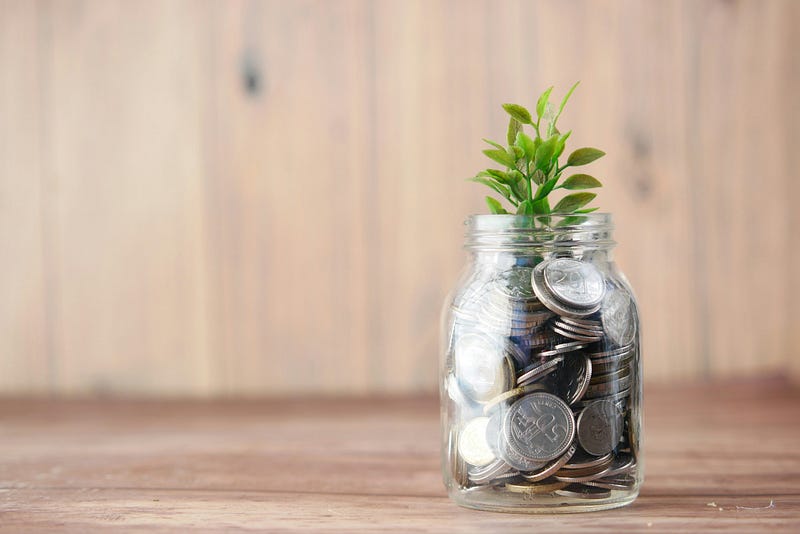
A Story: Alex’s Journey From Small Steps to $1 Million
Alex was 25 when he landed his first job. Like many young professionals, he earned just enough to cover rent, bills, and a few fun nights out. Saving felt impossible.
But Alex made one small decision: to invest $300 a month into an ETF portfolio. It wasn’t much — just about $10 a day.
At first, progress felt slow. After two years, Alex’s account showed only about $8,000. Nothing life-changing. Friends teased him: “That’s it? You could’ve bought a better car.”
But Alex stuck with it.
-
By 10 years, he had over $55,000.
-
By 20 years, his portfolio crossed $180,000.
-
By 30 years, the snowball hit $550,000.
-
By 35 years, his small contributions compounded into over $1 million.
All from $300 a month.
This is not luck. It’s not lottery tickets. It’s the math of compounding.
Albert Einstein famously said: “Compound interest is the eighth wonder of the world. He who understands it, earns it; he who doesn’t, pays it.”
The Math of Compounding
Let’s put Alex’s story into numbers. Suppose you invest in a low-cost ETF portfolio averaging 8% annual returns (the historical U.S. stock market average).
Here’s what happens with different monthly contributions:
Let’s put numbers behind the magic. Imagine three scenarios where you invest in a low-cost ETF portfolio earning an average 8% annual return (a reasonable historical benchmark for the stock market):
-
$100/month for 10 years → ~$18,000
-
$500/month for 10 years → ~$88,000
-
$1,000/month for 10 years → ~$176,000
Now stretch that discipline to 20 years:
-
$100/month → ~$55,000
-
$500/month → ~$277,000
-
$1,000/month → ~$554,000
And in 30 years?
-
$100/month → ~$135,000
-
$500/month → ~$677,000
-
$1,000/month → ~$1.35M
Notice how the first 10 years feel “slow,” but the next 20–30 years explode with growth. That’s compounding at work: small money moves, multiplied by time, snowball into life-changing wealth.
Why Compounding Feels “Invisible”
Morgan Housel, in The Psychology of Money, explains: “Compounding is not intuitive, because our minds are not built to think in exponential terms.”
Think about it:
-
If you double a dollar 20 times, you don’t end with $20 — you end with over $1 million.
-
If bamboo grows underground for 5 years unseen, then suddenly shoots up 90 feet in 6 weeks, most people call it a miracle. But it was compounding roots all along.
We don’t see progress at first, so we quit. But the magic happens if you stay long enough.
Why Most People Fail to Take Advantage
If compounding is so powerful, why don’t more people use it? Four reasons:
-
It feels too slow — In the early years, progress looks tiny compared to effort.
-
Short-term culture — We live in an “instant reward” world — likes, quick wins, same-day delivery. Wealth doesn’t work like that.
-
Fear of investing — Headlines scream about crashes, but long-term charts show steady growth.
-
Lifestyle creep — As income grows, expenses grow too. Instead of investing more, people buy more.
The truth? Time is the greatest asset you’ll ever have. Starting earlier — even with less money — beats starting later with more money.
Small Money Moves That Matter
Here’s how to start compounding today:
-
Automate savings → Pay yourself first. Set up an automatic transfer right after payday.
-
Dollar-cost averaging (DCA) → Invest the same amount each month, regardless of market ups and downs.
-
Index & ETF focus → Low-cost funds like VTI (U.S. total market), VOO (S&P 500), and VXUS (international) are simple and diversified.
-
Cut financial leaks → Cancel unused subscriptions, eat out one less time a week, redirect “found money” into investing.
-
Increase with raises → Every time your income goes up, increase your contribution by 10–20%.
The Discipline Factor
Discipline beats brilliance.
Most millionaires didn’t get there by timing the market or chasing “hot stocks.” They built wealth through consistency.
-
Someone who invested $500/month into VOO (S&P 500) over the last 20 years would now have over $300,000.
-
Someone who invested $1,000/month? Over $600,000.
Not by luck, but by time in the market.
A Practical Blueprint to $1 Million
Want to be like Alex and hit $1 million? Here’s a simple roadmap:
-
Start early → Even $100/month at 25 grows more than $500/month starting at 40.
-
Target: $500–$1,000/month → This range can push most people to millionaire status by 60.
-
Portfolio mix → 60% U.S. total market (VTI), 20% S&P 500 (VOO), 20% international (VXUS).
-
Review once a year → Don’t obsess daily. Check annually, rebalance if needed.
-
Stay invested during downturns → Bear markets feel scary, but selling is the biggest wealth-killer.
Psychology: How to Stay Consistent
Investing is less about spreadsheets and more about behavior.
-
Set it and forget it → Remove decision fatigue by automating.
-
Avoid comparison → Your coworker’s crypto win doesn’t matter. Focus on your plan.
-
Think decades, not days → The market is a voting machine in the short term, but a weighing machine in the long term (Ben Graham).
-
Celebrate milestones → First $10k, then $50k, then $100k. Motivation grows with progress.
Final Reflections
Einstein called compounding the eighth wonder of the world. Morgan Housel calls it non-intuitive.
The truth is, wealth is built quietly, slowly, and often invisibly. The $1 million portfolio at 60 started with someone’s decision at 25 to invest just a few dollars a day.
Your future self will thank you for the boring, consistent habits you start today.
Your Turn
I’d love to hear from you:
-
What’s the first small step you can take this month?
-
Have you experienced the power of compounding already?
-
What keeps you motivated to stay the course?
Drop your story in the comments. Someone else might start their journey because of you.
Towards Finance
Thank you for being part of the TF community.
-
📚 View more content in the Towards Finance publication.
-
📈 Get our free one-page stock analysis sheets by subscribing to our newsletter.
-
🤝🏽 Follow us on X and LinkedIn for more finance and data science content.